
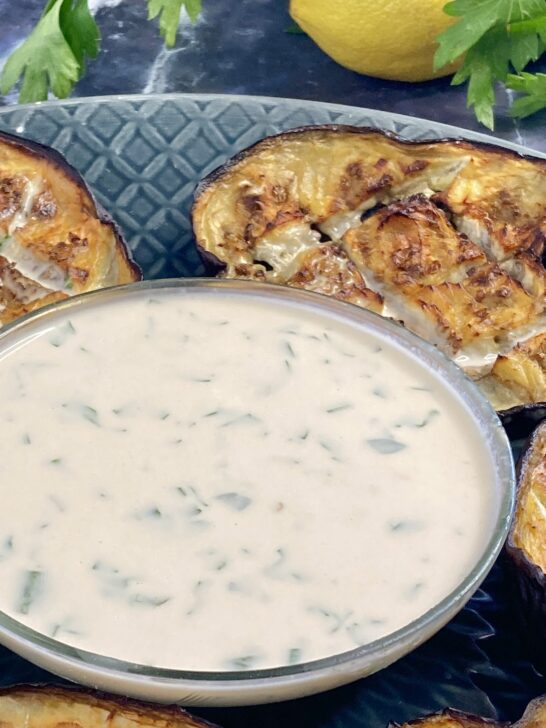
Did you know that it’s very easy to make Tahini sauce without a blender?
A seed nutty paste is made from store bought crushed or ground sesame seeds. It’s a staple in many Middle Eastern, Mediterranean cuisines including the Israeli kitchens.
When making your own Tahini sauce at home (also called Tehinah), you are actually creating an emulsion, so it’s best done by adding a bit of water at a time.
Why Make Tahini Sauce?
Making your own tahini dressing at home using store-bought raw tahini paste gives you full control over the texture and flavor, whether you want it thick like a dip or thin like a sauce.
There are 2 types of Tahini: Hulled and unhulled.
Hulled Tahini:
Made from sesame seeds with the outer shell (hull) removed. It’s smoother, lighter in color, and milder in taste.
Unhulled Tahini:
Made from whole sesame seeds with the hull intact. It’s darker, thicker, and slightly more bitter, with more calcium and fiber.
Check the label — it should say raw and list only sesame seeds (maybe salt).
Either way, most people won’t notice. Once mixed, it turns an off-white color.
What Meal Is Tahini For?
Tahini is incredibly versatile. It works as a dip, sauce, or dressing. Serve it with roasted veggies, drizzle it over cod bites, or use it as a creamy cucumber-tomato salad dressing, or for example, a carrot-quinoa salad.
Ingredients
- Raw Tahini (Hulled or Unhulled): The base of the dish, giving it a rich, nutty flavor and creamy consistency.
- Fresh Lemon Juice: Adds acidity.
- Chopped Parsley: Gives freshness, color, and a clean herbal note.
- Garlic Cloves: For a savory punch that deepens the flavor.
- Water:
- Table Salt: Just a pinch enhances all the other flavors.
Instructions (Gist Only)
Using a spoon, to make tahini dressing, start by mixing the raw tahini paste with other ingredients such as fresh lemon juice, minced garlic cloves, and chopped parsley.

Slowly add water while stirring until you reach your desired consistency. Now this part might seem tricky but it’s not.

Tahini thickens when water is added — keep mixing and slowly add more water until smooth. Use less for a dip, more for a sauce, and even more for a pourable consistency.
What Tahini Pairs With
Tahini pairs perfectly with pita bread, vegetable salad, or as a topping for Beef fritters, Cod bites/fingers, breaded sole, and Panko tortilla chicken bites. It also works beautifully as a dressing for salads like this simple Quinoa tomato-cucumber salad, and this easy cabbage-bell peppers salad, or this Classic potato-pickle salad. Tahini always adds richness and complexity to any dish. Pairs with hot spicy Schug dip.
Storage
Store your homemade tahini in an airtight container in the fridge for about a week. Stir well before using, as the oil may separate over time. I’ve never frozen Tahini but…
Should You Freeze It?
It depends:
- Tahini paste: Freezing is fine. It may separate after thawing—just stir.
Tahini sauce/dressing: Freezes okay, but the texture may change. A quick whisk usually brings it back.
Freezing Tips:
- Use small containers or ice cube trays to freeze in portions.
- Leave a little room at the top of containers—tahini expands slightly as it freezes.
- Label with the date—tahini paste lasts up to 6 months in the freezer.
Thawing Tips:
- Thaw in the fridge overnight for best results.
- Stir or blend well after thawing to restore texture.
Bottom Line:
- Freeze tahini paste if you won’t use it soon.
- Freeze tahini dressing only if you’re okay with slight texture changes.
- Either way, keep it airtight and portioned for convenience.
Related Dishes
Baba Ganoush – Another popular dip made with roasted eggplant, optional tahini, garlic, lemon, and olive oil. It’s smoky, rich, and full of flavor.
Health Benefits of Sesame Seeds
Sesame seeds are packed with protein, healthy fats, calcium, and antioxidants that support heart and heart health. Health benefits of sesame seeds according to Cleveland Clinic.
Let’s Chat!
Feel free to ask a question or share your thoughts in the comments section below!
Easy Tahini Sauce without a Blender

Tahini is a creamy, nutty paste made from ground sesame seeds, and it's a staple in many Middle Eastern and Mediterranean cuisines, including Israeli cooking.
Ingredients
- 1/2 cup raw Tahini paste
- 3 tablespoons fresh lemon juice
- 2 tablespoons freshly chopped parsley leaves (adds a lot of flavor)
- Water - 3 fl.oz. to 3½ fl.oz. (90 mL to 100 mL)
- Salt, to taste, or 1/3 or 1/2 teaspoon
Instructions
Start by mixing the raw tahini paste with fresh lemon juice, minced or crushed garlic and parsley leaves.
Slowly add water while stirring until you reach your desired consistency.
Add the salt gradually, tasting as you go. Start with a small pinch, stir it in, and taste before adding more. Once tahini becomes too salty, it’s hard to fix.
Nutrition Information
Yield
8Serving Size
1Amount Per Serving Calories 90Total Fat 8gSaturated Fat 1gTrans Fat 0gUnsaturated Fat 6gCholesterol 0mgSodium 34mgCarbohydrates 4gFiber 1gSugar 0gProtein 3g
Nutrition values are estimated.